
Beyond the Transaction: Building a Culture-Focused Total Rewards Strategy
Introduction
The labor market is constantly shifting, and in this environment, Total Rewards can’t just be a collection of disconnected policies—it has to be the heartbeat of your HR strategy.
I’ll never forget being interviewed for a high-level strategic role outside of my usual wheelhouse. The hiring manager looked at my background and asked how I’d handle a "strategic" position coming from such a "transactional" function like Total Rewards. Needless to say, my poker face failed me. I spent the rest of the interview defending the fact that compensation and benefits are some of the most strategic levers an organization has.
In today’s world, the old "standard" approach doesn't cut it. Between the demand for pay transparency, rising healthcare costs, and inflation, you can’t afford to view Total Rewards as transactional. To attract top talent and sustain performance, you need a rewards strategy that is intentionally driven by your culture.
Viewing Total Rewards Through a Strategic Lens
We’ve all heard Peter Drucker’s famous line: “Culture eats strategy for breakfast.” But when you align the two, Total Rewards becomes your most powerful tool for engagement.
Effective programs start with a clear strategy where your mission and values actually dictate your policies. To keep your programs on track, try looking at them through these three lenses.
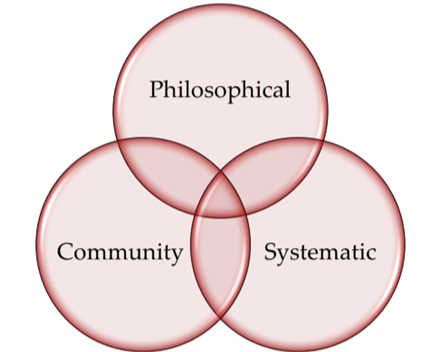
Total Rewards Strategic Lens
Philosophic Lens
This lens is all about the reasoning behind your decisions. Your compensation and benefits philosophy should be a direct reflection of:
Your Company Values: What you actually practice, not just what’s on the lobby wall?
Business Health: Your financial reality and organizational maturity.
Your Company Goals: Both short term and long term objectives.
Operational Reality: How you make money, manage assets and get things done.
Why is this “Strategic”?
Well, this is the obvious one. A solid philosophy acts as a strategic compass. It bridges the gap between high-level business goals and the Monday-morning employee experience through transparent, consistent decision-making.
An example of disconnect: The "High-Performance" Ghosting:
Scenario Imagine a leadership team that claims they pay for top-tier talent, but the budget only allows for "market average" raises. When a star player hits every goal but gets the same 3% bump as a low-performer, your philosophy is exposed as a cost-saving myth rather than a strategic driver.
The Fix: Move away from "peanut-buttering" (spreading a thin layer of raises across everyone). Instead, practice aggressive differentiation. If cash is capped, maintain your philosophy by supplementing raises with high-value rewards like equity, specialized development, or increased autonomy.
Systematic Lens
The systematic lens focuses on process, governance, and compliance. Strong total rewards programs are supported by:
Compliance & Governance: Keeping the "legal house" in order.
Data & Analytics: In-depth market research and internal equity reviews.
Systems & Automation: Documented procedures that eliminate bias and lag.
Why is this "Strategic"?
This lens provides the structural integrity you need to grow. When it works, market analytics ensure you’re competitive, and documented procedures ensure you’re fair. However, be careful—if governance becomes a rigid bottleneck, it can destroy employee trust. The goal is to remain defensible and consistent while staying ahead of future trends.
Community Lens
Total rewards don't operate in a vacuum. Success depends on collaboration inside and outside your office walls.
Internal Partners: Finance, executive leadership, legal, managers, and the employees themselves.
External Partners: Brokers, providers, peers, and professional associations.
Why is this Strategic?
In the past, HR was often viewed as a siloed "cost center" or the "policy police." But in a culture-driven model, relationships are the strategy. When HR leaders move from simply enforcing rules to acting as strategic consultants, the entire dynamic shifts.
By building these bridges, you gain the "political capital" and the data-backed insights needed to pivot when things get tough. When budget or legal constraints arise—and they always do a “partnership-first” approach allows you to offer creative, thoughtful alternatives rather than just saying "no."
Bringing it all Together
Ultimately, a great Total Rewards program isn’t about just offering more, t’s about offering what matters most. It’s about making sure your rewards reflect who you are as an organization and exactly where you’re headed.
By looking through these three lenses—the philosophical, the systematic, and the community—you can move past "reactive" HR and start building a forward-looking strategy. This isn't just about better spreadsheets; it’s about building credibility with leadership and providing real clarity for your employees.
When we stop treating Total Rewards as a dry administrative chore and start treating it as a strategic investment, it becomes a massive driver of culture and long-term success. It’s how you turn "compensation" into "contribution."
